
Welcome to the AI Terminology section of the AI blog! This comprehensive glossary is designed to help you navigate the complex world of artificial intelligence. Here, you’ll find clear, concise definitions and explanations of key AI terms and concepts, from foundational ideas like machine learning and neural networks to advanced topics such as reinforcement learning and variational autoencoders. Whether you’re a beginner or an expert, this resource is tailored to enhance your understanding and keep you up to date with the latest advancements in the field.

Data Mining
Data mining is the process of extracting valuable information from large data sets.

Generative Adversarial Network (GAN)
A Generative Adversarial Network, or GAN, is a type of artificial intelligence algorithm used for generating new data.

Data Science
Data science is the practice of extracting meaningful insights from data using statistics, programming, and domain knowledge to support better decisions.

Intelligence
There is no single definition of intelligence, and the concept of intelligence is complex and multi-dimensional. However, one common definition of intelligence is the ability to think abstractly, solve problems, and adapt to new situations.

Mathematical Optimization
Mathematical optimization is the process of finding the best possible solution to a problem by testing and evaluating different options.

Self-Aware
"Self-aware" systems are a type of artificial intelligence that have the ability to be aware of their own existence and to understand their own thoughts and feelings.


Artificial Intelligence (AI)
Artificial intelligence (AI) is the ability of a computer program or system to learn and think for itself.

Linear Algebra
Linear algebra is the study of mathematical problems that can be best explained in terms of lines and linear equations.

Optical Character Recognition (OCR)
Optical Character Recognition (OCR) is a technology that converts text in images or scans into editable, searchable digital data with high accuracy.

Computer Vision
Computer vision is an interdisciplinary field that deals with how computers can be made to gain a high-level understanding of digital images or videos.

Abductive Logic Programming (ALP)
Abductive Logic Programming (ALP) is a subfield of artificial intelligence that deals with the inference of unknown facts from known facts.

Natural Language Processing (NLP)
Natural language processing is a field of computer science and linguistics concerned with the interactions between computers and human languages, and the development of software that can understand natural language.
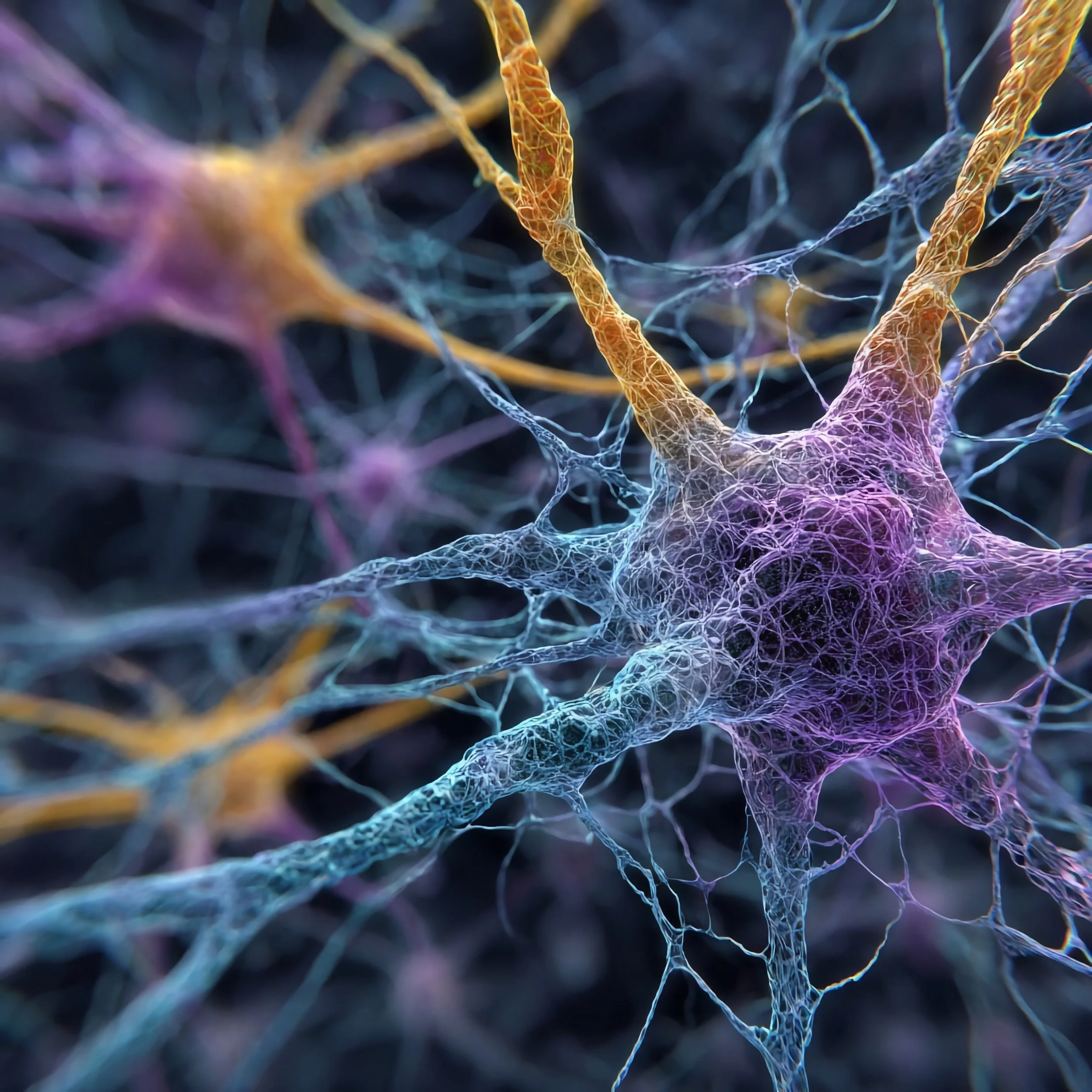
Neural Networks
A neural network is a computer system inspired by the human brain, using interconnected neurons to learn from data and perform complex tasks.

Mathematics
Mathematics underpins artificial intelligence, providing the language and structure behind algorithms, learning, probability, and decision making.

Human Intelligence
Human intelligence has been defined in many ways including as one's capacity for logic, abstract thought, understanding, self-awareness, communication, learning, emotional knowledge, memory, planning, creativity, and problem-solving.

Theory of Mind
Theory of mind systems are a type of artificial intelligence that focuses on understanding others' thoughts and beliefs.

Deliberative Machines
Deliberative machines represent the next step in AI evolution, capable of reasoning, planning, and making decisions through complex goal-oriented thought.
We generate a base framework for AI terminology definition articles with this prompt in the ChatGPT Atlas browser: Write a 1 paragraph introduction to the topic, then write paragraphs for non-technical and technical readers. Add a bullet point list of key aspects. Insert a 1-sentence TL;DR at the beginning. Also, append a 1 paragraph ELI5.